The unmoved mover is not an argument in favor of the existence of God

The unmoved mover is not an argument in favor of the existence of God

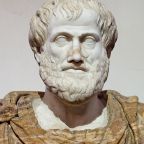
Aristotle’s concept of the unmoved mover has been widely used to justify the existence of God. However, this essay argues that the concept does not necessarily support such a conclusion. While my perspective on this argument has evolved and is explored in depth in my book This Is It, here I offer a critical reflection on how motion and the structures of reality can be explained without invoking a transcendent being, rethinking the relationship between causality, metaphysics, and ethics. Continue reading The unmoved mover is not an argument in favor of the existence of God
El primer motor inmóvil no es un argumento a favor de la existencia de Dios

El primer motor inmóvil no es un argumento a favor de la existencia de Dios

El concepto del primer motor inmóvil de Aristóteles ha sido ampliamente utilizado para justificar la existencia de Dios. Sin embargo, este ensayo argumenta que dicho concepto no necesariamente sustenta tal conclusión. Aunque mi visión sobre este argumento ha evolucionado y se encuentra desarrollada en profundidad en mi libro Esto es Todo, aquí propongo una reflexión crítica sobre cómo el movimiento y las estructuras de la realidad pueden explicarse sin recurrir a un ente trascendente, replanteando la relación entre causalidad, metafísica y ética. Continue reading El primer motor inmóvil no es un argumento a favor de la existencia de Dios

Can neuroscience tell us anything about cross-cultural differences?

Can neuroscience tell us anything about cross-cultural differences?

This essay explores the intersection of neuroscience and cultural studies, analyzing how brain function, genetics, and cultural values interact to shape behavior. It highlights the emergence of cultural neuroscience, a field combining disciplines such as neuroplasticity, cultural psychology, and gene-culture coevolution studies, to explain cross-cultural differences. It challenges the notion of unidirectional causation, emphasizing the bidirectional influence between genes, brain processes, and cultural environments. The essay reviews key studies on topics like socio-economic status, racial identification, religiosity, and the serotonin transporter gene, illustrating how culture and neural mechanisms mutually influence one another. Finally, it questions simplistic causal models and stresses the need for nuanced interpretations of how biological and cultural factors coevolve. Continue reading Can neuroscience tell us anything about cross-cultural differences?

The Master and the Common Man in the Tao Te Ching – Some Reflections

The Master and the Common Man in the Tao Te Ching – Some Reflections

This essay explores the concepts from the Tao Te Ching regarding the Master and the common man, highlighting the difference between acting naturally and selflessly versus seeking results with selfish intentions. It reflects on how the conscious pursuit of virtues like justice or power can detract from the authenticity of human actions. The importance of balancing consciousness and unconsciousness in behavior is also discussed, emphasizing how naturalness can influence excellence while acknowledging the need for harmony between these aspects to promote well-being and authenticity. Finally, it analyzes how conscious expectations can affect happiness, suggesting a life more aligned with the Tao as a path to fulfillment. Continue reading The Master and the Common Man in the Tao Te Ching – Some Reflections

El maestro y el hombre común en el Tao Te Ching – Algunas reflexiones

El maestro y el hombre común en el Tao Te Ching – Algunas reflexiones

En este ensayo se exploran los conceptos del Tao Te Ching sobre el Maestro y el hombre común, destacando la diferencia entre actuar de forma natural y desinteresada frente a buscar resultados con intenciones egoístas. Reflexiona sobre cómo la búsqueda consciente de virtudes como la justicia o el poder puede restar autenticidad a las acciones humanas. También se aborda la importancia del equilibrio entre la conciencia y la inconsciencia en la conducta, destacando cómo la naturalidad puede influir en la excelencia, pero reconociendo la necesidad de balancear estos aspectos para promover el bienestar y la autenticidad. Finalmente, se analiza cómo las expectativas conscientes pueden afectar la felicidad, sugiriendo una vida más alineada con el Tao como camino hacia la plenitud. Continue reading El maestro y el hombre común en el Tao Te Ching – Algunas reflexiones

Applying Bayes’ concepts to the understanding of consciousness – Some errors

Applying Bayes’ concepts to the understanding of consciousness – Some errors

The essay critiques the application of Bayesian concepts to understanding consciousness, particularly in the field of neuroscience. It examines how visual illusions, such as the hollow-face illusion, are often interpreted as evidence that conscious perception is a Bayesian brain process predicting what it “should” see. The essay questions this interpretation, highlighting the lack of comparable illusions in other sensory modalities like touch or smell, and arguing that such phenomena might instead reflect perceptual mechanisms unrelated to prediction. The discussion emphasizes the need for caution in extending Bayesian frameworks to consciousness without robust evidence and explores alternative explanations, such as pattern activation, that may better account for these illusions. Continue reading Applying Bayes’ concepts to the understanding of consciousness – Some errors

Aplicando los conceptos de Bayes al entendimiento de la conciencia – Algunos errores

Aplicando los conceptos de Bayes al entendimiento de la conciencia – Algunos errores

El ensayo critica la aplicación de los conceptos bayesianos para entender la conciencia, especialmente en el campo de la neurociencia. Examina cómo las ilusiones visuales, como la ilusión del rostro hueco, a menudo se interpretan como evidencia de que la percepción consciente es un proceso bayesiano en el cerebro que predice lo que “debería” ver. El ensayo cuestiona esta interpretación, destacando la falta de ilusiones comparables en otras modalidades sensoriales como el tacto o el olfato, y argumenta que tales fenómenos podrían reflejar mecanismos perceptuales no relacionados con la predicción. La discusión enfatiza la necesidad de precaución al aplicar marcos bayesianos a la conciencia sin una evidencia sólida y explora explicaciones alternativas, como la activación de patrones, que podrían explicar mejor estas ilusiones. Continue reading Aplicando los conceptos de Bayes al entendimiento de la conciencia – Algunos errores

Returning to Uruguay and the broken window

Returning to Uruguay and the broken window

The essay reflects on the “broken window” theory and its relationship with the care of public spaces in Montevideo, contrasting it with Europe. It examines how urban disorder, such as graffiti and litter, can influence perceptions of insecurity and create a vicious cycle of transgression and neglect. Studies like those by Wilson and Kelling are explored, highlighting that maintaining public order improves perceptions of safety, even if it doesn’t necessarily reduce actual crime. Social factors such as poverty and racial context that shape these perceptions are also discussed. Finally, the importance of caring for public spaces to enhance urban quality of life is emphasized. Continue reading Returning to Uruguay and the broken window

Volviendo a Uruguay y la ventana rota

Volviendo a Uruguay y la ventana rota

El ensayo reflexiona sobre la teoría de la “ventana rota” y su relación con el cuidado del espacio público en Montevideo, en contraste con Europa. Aborda cómo el desorden urbano, como grafitis y basura, puede influir en la percepción de inseguridad y generar un círculo vicioso de trasgresión y descuido. Se exploran estudios como los de Wilson y Kelling, quienes señalan que mantener el orden público mejora la percepción de seguridad, aunque no necesariamente reduce el crimen real. También se discuten factores sociales, como la pobreza y el contexto racial, que moldean estas percepciones. Finalmente, se plantea la importancia de cuidar el espacio público para mejorar la calidad de vida urbana. Continue reading Volviendo a Uruguay y la ventana rota

The real bias is moral – Artificial Intelligence

The real bias is moral – Artificial Intelligence

This article reflects on the concept of moral bias in discussions about artificial intelligence, specifically in relation to Thomas Metzinger’s essay on “Benevolent Artificial Anti-Natalism.” It questions whether a superintelligence would prioritize eliminating human suffering over maximizing well-being, arguing that this hierarchy reflects a cultural bias rather than a universal truth. Furthermore, it challenges the prevailing view of AI as a tool for solving human problems without considering its potential autonomy and free will, prompting a rethinking of our ethical expectations regarding these emerging technologies. Continue reading The real bias is moral – Artificial Intelligence