
Two dimensions of art – a critique

Two dimensions of art – a critique

Ayn Rand argues that art is a selective recreation of reality based on an artist’s metaphysical values. According to her view, not every human creation qualifies as art, but only those works that integrate elements of reality to express philosophical and psycho-epistemological abstractions. Her concept of the “sense of life” plays a key role in artistic appreciation, as it represents an individual’s fundamental beliefs about reality and human cognition. This perspective sparks debates about the limits and function of art within Randian philosophy. Continue reading Two dimensions of art – a critique


Dos dimensiones del arte – una crítica

Dos dimensiones del arte – una crítica

Ayn Rand sostiene que el arte es una recreación selectiva de la realidad basada en los valores metafísicos del artista. Según su visión, no cualquier creación humana puede considerarse arte, sino aquellas obras que integran elementos de la realidad para expresar abstracciones filosóficas y psico-epistemológicas. Su concepto de “sentido de la vida” juega un papel clave en la apreciación artística, pues representa las creencias fundamentales del individuo sobre la realidad y su visión de la cognición humana. Esta perspectiva genera debates sobre los límites y la función del arte dentro de la filosofía randiana. Continue reading Dos dimensiones del arte – una crítica

Savants’ skills – A short review

Savants’ skills – A short review

Savant Syndrome is a phenomenon where individuals with severe brain impairment exhibit extraordinary abilities in specific areas such as music, calculation, and memory. Various theories have been proposed to explain these abilities, including hyperfunctioning memory models, paradoxical facilitation, and autism-related models. Recent research suggests that transcranial magnetic stimulation (TMS) may induce savant-like skills in neurotypical individuals, possibly by reducing inhibition in specific neural networks. Studies have shown improvements in visual memory, reduction of false memories, and increased numerical accuracy after TMS application. Additionally, cases of acquired Savant Syndrome following brain injuries suggest that certain cognitive abilities may be latent in all individuals but are typically inhibited by the brain. Continue reading Savants’ skills – A short review

Consciousness is not integrated information – A brief summary

Consciousness is not integrated information – A brief summary

he essay critiques Integrated Information Theory (IIT) as an explanation for subjective consciousness, arguing that mere integration of neural activity does not account for qualia. Using the analogy of a camera’s photodiodes, it highlights that integration alone does not create subjective experience. The brain, like a network of independent yet interconnected neurons, lacks a unified perception of qualia merely through integration. Instead, consciousness arises from identity—a unitary sense of self that aligns with neural patterns but is not reducible to them. The discussion touches on the implications for thought experiments like Mary’s room, suggesting that while neural activity can explain behavior and cognition, qualia remain irrelevant to brain function and may not be necessary for explaining consciousness itself. Continue reading Consciousness is not integrated information – A brief summary

A vision about ethics and morality based on science. Some reflections.

A vision about ethics and morality based on science. Some reflections.

Sam Harris’ book The Moral Landscape argues that morality should be based on the well-being of conscious beings and that science can objectively determine which actions contribute to this well-being. Harris rejects moral relativism and claims that we already know enough about the brain and its relationship with the world to identify correct answers regarding morality. However, criticisms from philosophical objectivism argue that happiness is not the standard of morality but its consequence and that rational values are the true ethical foundation. The essay suggests that reward, rather than mere happiness, is the fundamental criterion of morality, highlighting self-esteem as the central axis of human well-being. Additionally, it discusses how morality could apply even to artificial intelligences with reward patterns, regardless of their subjective consciousness. Continue reading A vision about ethics and morality based on science. Some reflections.

Una visión sobre la ética y la moral basada en la ciencia. Algunas reflexiones.

Una visión sobre la ética y la moral basada en la ciencia. Algunas reflexiones.

El libro The Moral Landscape de Sam Harris plantea que la moralidad debe basarse en el bienestar de los seres conscientes y que la ciencia puede determinar objetivamente qué acciones contribuyen a este bienestar. Harris rechaza el relativismo moral y argumenta que ya conocemos lo suficiente sobre el cerebro y su relación con el mundo como para identificar respuestas correctas sobre la moralidad. Sin embargo, existen críticas desde el objetivismo filosófico, que sostiene que la felicidad no es el estándar de la moralidad, sino su consecuencia, y que los valores racionales son la verdadera base ética. El ensayo plantea que la recompensa, y no solo la felicidad, es el criterio fundamental de la moralidad, destacando la autoestima como el eje central del bienestar humano. Además, se discute cómo la moralidad podría aplicarse incluso a inteligencias artificiales con patrones de recompensa, independientemente de su conciencia subjetiva. Continue reading Una visión sobre la ética y la moral basada en la ciencia. Algunas reflexiones.

Post-rationalism and mental health

Post-rationalism and mental health

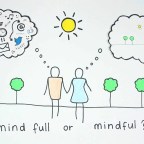
This essay explores whether it is better for our mental health to think about our problems or avoid doing so, analyzing metacognition, cognitive-behavioral therapy, and the role of meditation in emotional processing. It argues that conceptual thinking may be limited in addressing deeply rooted emotions, while an experiential approach, such as mindfulness, can facilitate a more effective integration of thoughts and emotions. Studies support that mindfulness and experiential reflection can promote emotional well-being by reducing rumination and improving emotional regulation. Continue reading Post-rationalism and mental health

On determinism and free will – Some reflections

On determinism and free will – Some reflections

This essay explores the nature of voluntary and involuntary actions, with an emphasis on decision-making within the volitional process. It examines the neuroscientific foundations of free will and the influence of unconscious processes on decision-making. Through the analysis of theories and experiments such as those of Libet, it questions whether conscious will is truly autonomous or determined by prior causes. Additionally, it reviews the philosophical and scientific implications of materialist monism versus dualist conceptions of the mind. Continue reading On determinism and free will – Some reflections

Sobre el determinismo y el libre albedrío – Algunas reflexiones

Sobre el determinismo y el libre albedrío – Algunas reflexiones

Este ensayo explora la naturaleza del acto voluntario e involuntario, con énfasis en la decisión dentro del proceso volitivo. Se abordan las bases neurocientíficas del libre albedrío y la influencia de procesos inconscientes en la toma de decisiones. A través del análisis de teorías y experimentos como los de Libet, se cuestiona si la voluntad consciente es realmente autónoma o si está determinada por causas previas. Además, se revisan las implicaciones filosóficas y científicas del monismo materialista frente a concepciones dualistas de la mente. Continue reading Sobre el determinismo y el libre albedrío – Algunas reflexiones

La importancia de los qualia en el fenómeno de la conciencia. Aportes desde la neurobiología. Tesis de Revisión Bibliográfica.

La importancia de los qualia en el fenómeno de la conciencia. Aportes desde la neurobiología. Tesis de Revisión Bibliográfica.

Este ensayo explora el concepto de conciencia, centrándose particularmente en la noción de qualia—la experiencia subjetiva de la percepción—y su relación con la neurobiología. Se argumenta que los qualia no son algo separado de los procesos cerebrales y que pueden estudiarse desde una perspectiva neurobiológica. Se analizan diversos fenómenos cerebrales y trastornos neurológicos para comprender las posibles bases neurobiológicas de los qualia. El ensayo también discute cómo la experiencia consciente normal, en la que se integran forma, color y movimiento, sugiere la existencia de un mecanismo neural subyacente que permite esta integración. Finalmente, se examina si los qualia representan una ventaja adaptativa resultado de la selección natural. Continue reading La importancia de los qualia en el fenómeno de la conciencia. Aportes desde la neurobiología. Tesis de Revisión Bibliográfica.