
Does consciousness have a purpose?

Does consciousness have a purpose?

The essay examines the question of whether consciousness has a biological or adaptive purpose, a topic central to the debate on the nature of consciousness. While many scholars argue that consciousness plays a vital role in cognitive functions such as planning, executive control, and social cognition, others propose it might be a by-product of other processes. The essay explores various theories, including the adaptive advantages of consciousness for future planning and decision-making, as well as the concept of qualia. It also raises the challenge of defining consciousness and whether it serves an essential function or is merely a secondary phenomenon. The discussion highlights ongoing research and contradictions in the field, questioning the evolutionary necessity of consciousness. Continue reading Does consciousness have a purpose?
Can neuroscience tell us anything about cross-cultural differences?

Can neuroscience tell us anything about cross-cultural differences?

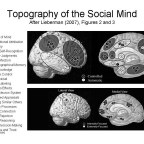
This essay explores the intersection of neuroscience and cultural studies, analyzing how brain function, genetics, and cultural values interact to shape behavior. It highlights the emergence of cultural neuroscience, a field combining disciplines such as neuroplasticity, cultural psychology, and gene-culture coevolution studies, to explain cross-cultural differences. It challenges the notion of unidirectional causation, emphasizing the bidirectional influence between genes, brain processes, and cultural environments. The essay reviews key studies on topics like socio-economic status, racial identification, religiosity, and the serotonin transporter gene, illustrating how culture and neural mechanisms mutually influence one another. Finally, it questions simplistic causal models and stresses the need for nuanced interpretations of how biological and cultural factors coevolve. Continue reading Can neuroscience tell us anything about cross-cultural differences?