
Preserving Personhood and Identity: Navigating the Buddhist Implications of the “No-Self” and Circumnavigating Confusions Regarding Our Ego

Preserving Personhood and Identity: Navigating the Buddhist Implications of the “No-Self” and Circumnavigating Confusions Regarding Our Ego

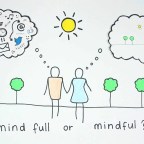
This essay explores the relationship between the Buddhist concept of “no-self” and personal identity, arguing that while the teaching of anatta can be liberating, it can also create confusion and adverse effects if misinterpreted. The discussion delves into how mindfulness practice, particularly the Dzogchen approach, can lead to depersonalization if misunderstood. Drawing from philosophers and neuroscientists like Francisco Varela, Evan Thompson, Thomas Metzinger, and Antonio Damasio, the argument supports the existence of personhood and identity as a functional construct based on self-awareness. The conclusion emphasizes that rather than negating identity, meditative practice can be a powerful tool to explore and understand the nature of consciousness without falling into nihilism. Continue reading Preserving Personhood and Identity: Navigating the Buddhist Implications of the “No-Self” and Circumnavigating Confusions Regarding Our Ego
In Defense of Free Will: How Modern Materialism and Determinism Are Mistaken

In Defense of Free Will: How Modern Materialism and Determinism Are Mistaken

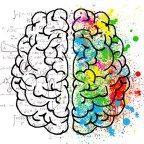
The debate on free will has been shaken by the rise of materialist determinism, driven by neuroscience and physics. Authors like Sam Harris argue that our decisions are mere products of neural processes and external factors, stripping consciousness of its autonomy. However, this essay challenges that perspective, exploring arguments in defense of a radical form of free will that might withstand deterministic objections. Is our will an illusion, or is there still room for true human agency? Continue reading In Defense of Free Will: How Modern Materialism and Determinism Are Mistaken

Neuroscience and optical illusions

Neuroscience and optical illusions

The essay explores the visual system within Neuroscience and Cognitive Sciences, analyzing its complexity and relevance for understanding the brain. It describes the neuronal processes involved in visual perception, from the retina to the cerebral cortex, highlighting the functions of photoreceptors, the dorsal and ventral pathways, and specialized cells in visual processing. Additionally, it examines optical illusions and their implications for interpreting sensory stimuli, addressing the debate on whether the brain actively predicts or passively responds to visual information. Continue reading Neuroscience and optical illusions

Three short divulgation essays – 3 Increasing well-being: the neuroscience of good habits

Three short divulgation essays – 3 Increasing well-being: the neuroscience of good habits

Well-being is a broad concept encompassing multiple dimensions, all unified by subjective states of positive mood and long-term pleasure. Despite the overestimation of the impact of certain methods such as supplements or therapies without sufficient scientific backing, there are habits with strong empirical evidence that significantly enhance well-being. This essay explores, from a neuroscience perspective, the impact of exercise, meditation, sleep, and nutrition on well-being. It highlights that exercise not only improves physical health but also plays a crucial role in mental health by alleviating anxiety and depression, enhancing cognition, and increasing resilience to stress. Likewise, meditation has positive effects on emotional regulation, pain control, and brain plasticity, with demonstrated benefits at the structural and functional levels of the brain. Continue reading Three short divulgation essays – 3 Increasing well-being: the neuroscience of good habits

Three short divulgation essays – 2 The neuroscience of creativity

Three short divulgation essays – 2 The neuroscience of creativity

Creativity is a complex process involving the discovery of common patterns between previously unrelated concepts. From a neuroscientific perspective, creativity is linked to the activity of various brain networks, dopamine, and divergent thinking. Neuroimaging studies have shown that there is no single “creative hemisphere”; rather, creativity emerges from the interaction of multiple brain areas. Additionally, there is a connection between creativity and mental disorders such as schizophrenia and bipolar disorder, due to the way the brain processes information and reward. Continue reading Three short divulgation essays – 2 The neuroscience of creativity

Post-rationalism and mental health

Post-rationalism and mental health

This essay explores whether it is better for our mental health to think about our problems or avoid doing so, analyzing metacognition, cognitive-behavioral therapy, and the role of meditation in emotional processing. It argues that conceptual thinking may be limited in addressing deeply rooted emotions, while an experiential approach, such as mindfulness, can facilitate a more effective integration of thoughts and emotions. Studies support that mindfulness and experiential reflection can promote emotional well-being by reducing rumination and improving emotional regulation. Continue reading Post-rationalism and mental health

On determinism and free will – Some reflections

On determinism and free will – Some reflections

This essay explores the nature of voluntary and involuntary actions, with an emphasis on decision-making within the volitional process. It examines the neuroscientific foundations of free will and the influence of unconscious processes on decision-making. Through the analysis of theories and experiments such as those of Libet, it questions whether conscious will is truly autonomous or determined by prior causes. Additionally, it reviews the philosophical and scientific implications of materialist monism versus dualist conceptions of the mind. Continue reading On determinism and free will – Some reflections

Does consciousness have a purpose?

Does consciousness have a purpose?

The essay examines the question of whether consciousness has a biological or adaptive purpose, a topic central to the debate on the nature of consciousness. While many scholars argue that consciousness plays a vital role in cognitive functions such as planning, executive control, and social cognition, others propose it might be a by-product of other processes. The essay explores various theories, including the adaptive advantages of consciousness for future planning and decision-making, as well as the concept of qualia. It also raises the challenge of defining consciousness and whether it serves an essential function or is merely a secondary phenomenon. The discussion highlights ongoing research and contradictions in the field, questioning the evolutionary necessity of consciousness. Continue reading Does consciousness have a purpose?

Applying Bayes’ concepts to the understanding of consciousness – Some errors

Applying Bayes’ concepts to the understanding of consciousness – Some errors

The essay critiques the application of Bayesian concepts to understanding consciousness, particularly in the field of neuroscience. It examines how visual illusions, such as the hollow-face illusion, are often interpreted as evidence that conscious perception is a Bayesian brain process predicting what it “should” see. The essay questions this interpretation, highlighting the lack of comparable illusions in other sensory modalities like touch or smell, and arguing that such phenomena might instead reflect perceptual mechanisms unrelated to prediction. The discussion emphasizes the need for caution in extending Bayesian frameworks to consciousness without robust evidence and explores alternative explanations, such as pattern activation, that may better account for these illusions. Continue reading Applying Bayes’ concepts to the understanding of consciousness – Some errors