
A continuación puedes encontrar los correspondientes enlaces a mis publicaciones de libros. Puede adquirir las versiones digital o en papel en la tienda de Amazon. También cuentas con un enlace a la versión EPUB/PDF que se ofrece de forma libre para descargar.
Below you can find the corresponding links to my book publications. You can aquire the digital or paper versions at the Amazon store. You also have a link to the EPUB/PDF version, which is freely available for download.
Versiones en castellano debajo/Spanish versions below
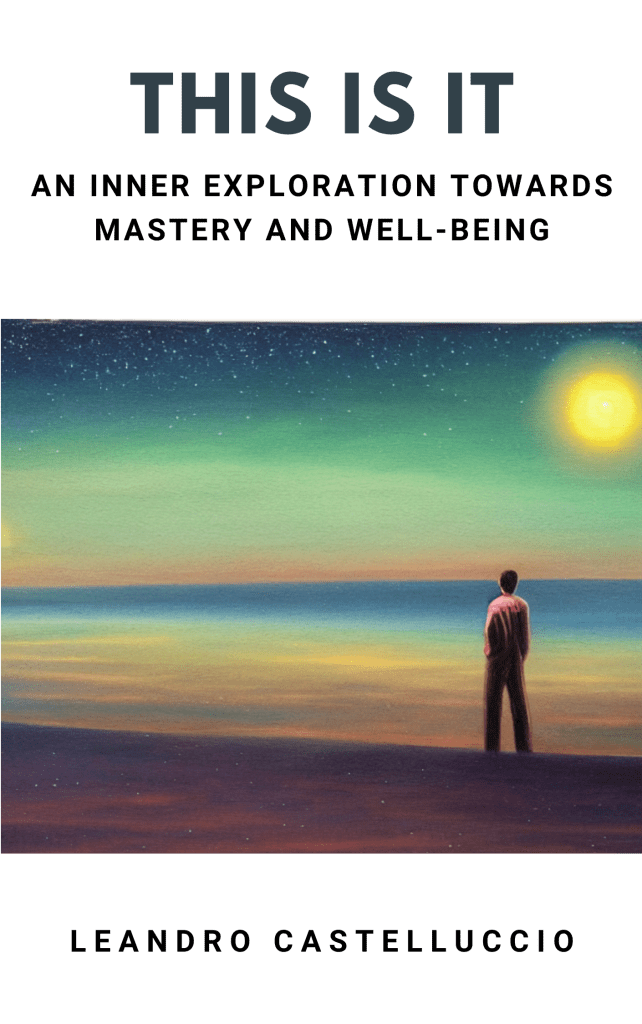
Table of contents: Link
Amazon Kindle: Link
Amazon Paperback: Link
Free PDF/EPUB: Dropbox Link
Synopsis
We live surrounded by information, techniques, and stimuli, yet increasingly removed from an authentic inner orientation. We know how to do many things, but we do not know clearly for what purpose. Between hyperproductivity and an irrational skepticism, between constant noise and silent fatigue, something essential seems to have been lost: the capacity to inhabit one’s own life with heroism.
This book begins from that loss—not to lament it, but to interrogate it with rigor. Its proposal revolves around an idea now nearly forgotten: nobility of spirit. Not as a moral ideal or a cultural inheritance, but as a mode of relating to oneself, to others, and to the world. A disposition that entails lucidity, inner mastery, and a certain existential courage in the face of contemporary chaos.
Through three central axes—personal mastery, the perspective of the sage, and the figure of the hero—the text explores how a form of consciousness capable of sustaining itself without cynicism and without self-deception is cultivated. The aim is not to attain a superficial happiness, but to learn how to think, feel, and act from a depth that does not depend on external approval or ideological fashions.
In dialogue with philosophy, psychology, cognitive science, and contemplative traditions, the work calls into question some of the most deeply entrenched assumptions of our time: the reduction of the mind to the material and functional, the absolute denial of free will, and the trivialization of meaning reduced to utility. In response, it advances a demanding hypothesis: that consciousness may be deeper and more significant than we assume, that freedom—though conditioned—is not a rhetorical illusion, and that life may be something more than adaptation and survival.
This is not a book of easy answers. It is an invitation to recover the density of experience, to train attention, to think with precision, and to live with greater inner responsibility. It is a call to those who suspect that, even amid modern disenchantment, a higher form of lucidity remains possible.

Tabla de contenidos: Link
Amazon Kindle: Link
Amazon Versión en Papel/Paperback: Link
Versión PDF/EPUB libre: Dropbox Link
Sinopsis
Vivimos rodeados de información, técnicas y estímulos, pero cada vez más alejados de una orientación interior auténtica. Sabemos hacer muchas cosas, pero no sabemos bien para qué. Entre la hiperproductividad y el escepticismo sin racionalidad, entre el ruido constante y la fatiga silenciosa, algo esencial parece haberse extraviado: la capacidad de habitar la propia vida con heroísmo.
Este libro parte de esa pérdida. No para lamentarla, sino para interrogarla con rigor. Su propuesta gira en torno a una idea hoy casi olvidada: la nobleza de espíritu. No como ideal moral ni como herencia cultural, sino como una forma de relación consigo mismo, con los otros y con el mundo. Una disposición que implica lucidez, dominio interior y una cierta valentía existencial frente al caos contemporáneo.
A través de tres núcleos —la maestría personal, la mirada del sabio y la figura del héroe— el texto explora cómo se forma una conciencia capaz de sostenerse sin cinismo y sin autoengaño. No se trata de alcanzar una felicidad superficial, sino de aprender a pensar, sentir y actuar desde una profundidad que no dependa de la aprobación externa ni de las modas ideológicas.
En diálogo con la filosofía, la psicología, las ciencias cognitivas y las tradiciones contemplativas, la obra cuestiona algunos de los supuestos más arraigados de nuestra época: la reducción de la mente a lo material y funcional, la negación absoluta del libre albedrío o la trivialización del sentido reducido a utilidad. Frente a ello, propone una hipótesis exigente: que la conciencia puede ser más profunda y relevante de lo que pensamos, que la libertad —aunque condicionada— no es una ilusión retórica, y que la vida puede ser algo más que adaptación y supervivencia.
Este no es un libro de respuestas fáciles. Es una invitación a recuperar la densidad de la experiencia, a entrenar la atención, a pensar con precisión y a vivir con mayor responsabilidad interior. Un llamado a quienes sospechan que, incluso en medio del desencanto moderno, todavía es posible una forma más alta de lucidez.
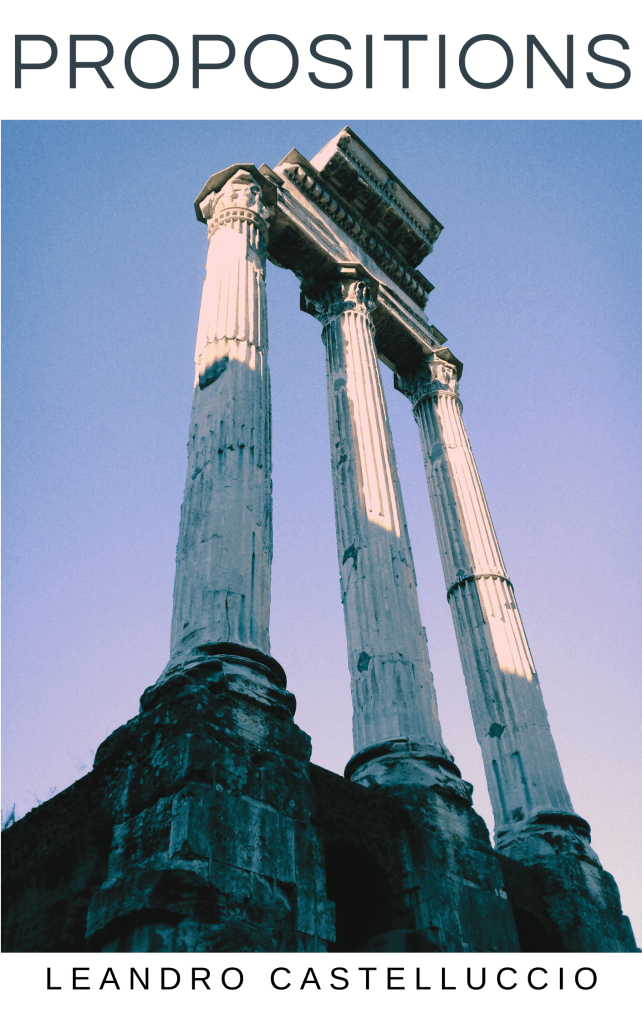
Amazon Kindle: Link
Amazon Paperback: Link
Free PDF/EPUB: Dropbox Link
Synopsis
Propositions is a philosophical treatise of systematic ambition and atemporal vocation. Within it unfolds a rigorous conceptual architecture that traverses, in an organic manner, metaphysics, epistemology, philosophy of mind, ethics, and political philosophy, with the aim of clarifying some of the most persistent and decisive problems of human existence.
In critical dialogue with the great philosophical tradition—and drawing inspiration from thinkers such as Aristotle and Wittgenstein—the work develops its own theoretical framework for examining the limits of reality and their implications for meaning, freedom, and the idea of God; the nature of meaning beyond conceptual reference; the enigma of subjective consciousness and personal identity; and the most fertile ethical criterion for guiding human action, both at the individual level and within the social and political domains.
Throughout the text, four central theses are articulated that challenge widely established conceptions in contemporary philosophy. From the dissociation between the existence of God and the notion of ultimate meaning, through a reformulation of the problem of meaning and an original proposal concerning subjective experience and qualia, to a critique of traditional ethical models and the formulation of an ethical criterion grounded in objective states of reward, Propositions advances with logical rigor and conceptual clarity toward conclusions of broad theoretical scope.
Without relying extensively on exegesis or on the accumulation of citations, the book develops an autonomous reflection that seeks to disclose the ultimate implications of its postulates and to offer substantive contributions to central philosophical debates of our time.
More than an introduction or a commentary, Propositions stands within the tradition of works that seek to think the whole: the structure of reality, the nature of mind, the foundations of ethics, and the place of the human being in the world. It is a treatise that calls the reader to a radical, sustained, and uncompromising philosophical reflection.

Amazon Kindle: Link
Amazon Versión en Papel/Paperback: Link
Versión PDF/EPUB libre: Dropbox Link
Sinopsis:
Proposiciones es un tratado filosófico de ambición sistemática y vocación atemporal. En él se despliega una arquitectura conceptual rigurosa que recorre, de manera orgánica, la metafísica, la epistemología, la filosofía de la mente, la ética y la política, con el propósito de esclarecer algunos de los problemas más persistentes y decisivos de la existencia humana.
En diálogo crítico con la gran tradición filosófica —y tomando inspiración en pensadores como Aristóteles y Wittgenstein—, la obra elabora un marco teórico propio para examinar los límites de la realidad y sus implicancias para el sentido, la libertad y la idea de Dios; la naturaleza del significado más allá de la referencia conceptual; el enigma de la conciencia subjetiva y la identidad personal; y el criterio ético más fértil para orientar la acción humana, tanto en el plano individual como en el social y político.
A lo largo del texto se articulan cuatro tesis centrales que cuestionan concepciones ampliamente asentadas en la filosofía contemporánea. Desde la disociación entre la existencia de Dios y la noción de sentido último, pasando por una reformulación del problema del significado y una propuesta original sobre la experiencia subjetiva y los qualia, hasta una crítica de los modelos éticos tradicionales y la formulación de un criterio ético fundado en estados objetivos de recompensa, Proposiciones avanza con rigor lógico y claridad conceptual hacia conclusiones de amplio alcance teórico.
Sin apoyarse extensamente en la exégesis ni en la acumulación de citas, el libro desarrolla una reflexión autónoma que aspira a revelar las implicancias últimas de sus postulados y a ofrecer aportes sustantivos a debates filosóficos centrales de nuestro tiempo.
Más que una introducción o un comentario, Proposiciones se inscribe en la tradición de las obras que buscan pensar la totalidad: la estructura de lo real, la naturaleza de la mente, los fundamentos de la ética y el lugar del ser humano en el mundo. Un tratado que convoca al lector a una reflexión filosófica radical, sostenida y sin concesiones.
 Sinapticas